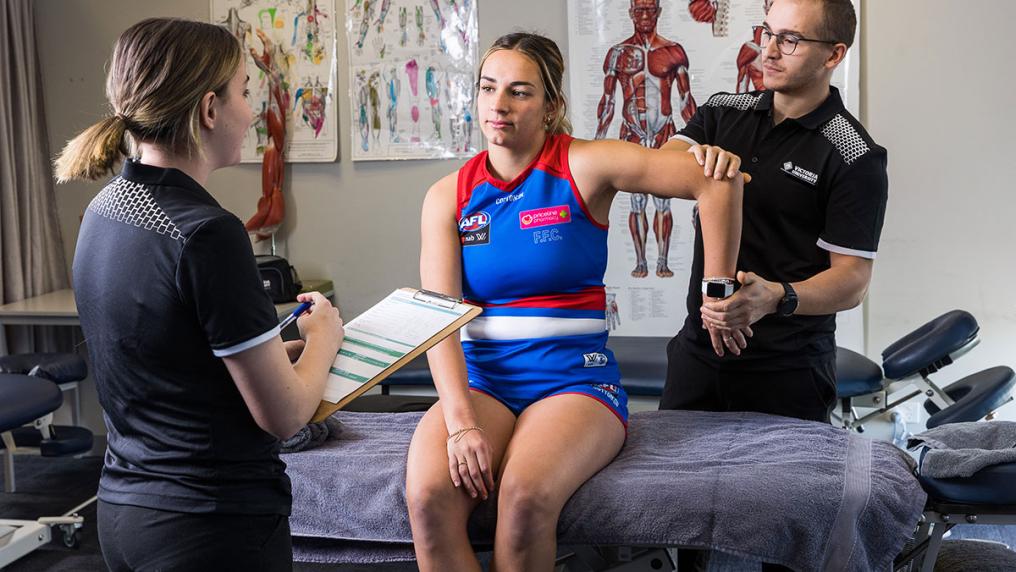
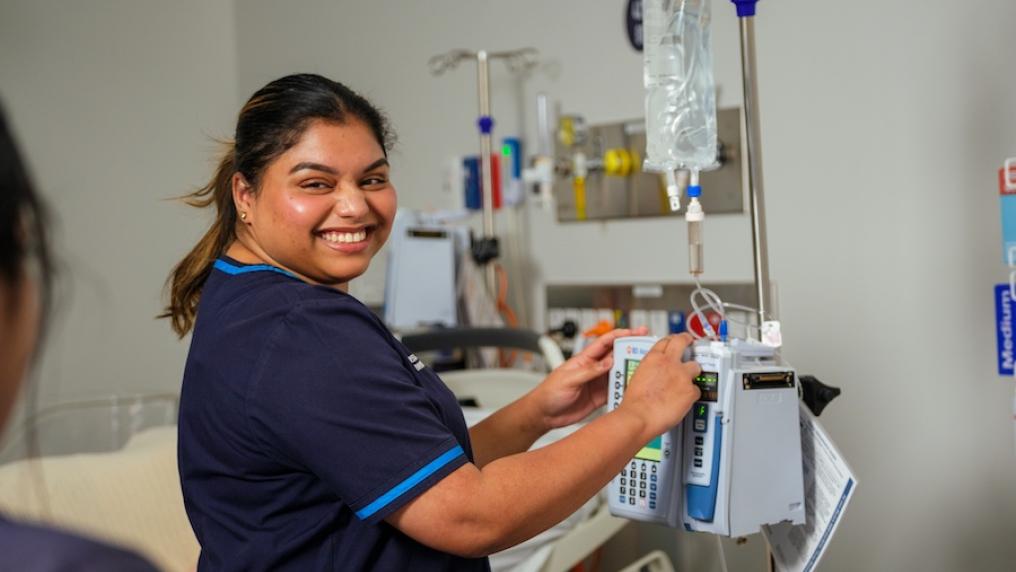
If you've just finished Year 12, the most common route is the Bachelor of Applied Movement Sciences/Master of Physiotherapy, a 4.5 year dual degree.
You’ll start by learning how bodies move, load, adapt and recover – then progress into physio-specific skills like assessment, clinical reasoning and treatment planning.
Physio is learned by doing. You’ll complete supervised professional practice across a mix of settings (think private practice, acute care, rehab, aged care, community and performance environments). You'll be able to access placement opportunities across a variety of organisations, including VU partners Western Health and the Western Bulldogs.
Finish the course and required professional practice. After that, you’ll be eligible to apply for registration and step into entry-level physiotherapy roles.
How to become a physiotherapist in Australia: qualifications & career paths
If you’re into sport, physio probably pops up on your radar early. It’s active, people-focused, and it sits right at the intersection of performance and health.
But physio isn’t just sport and private practice. Physiotherapists work across hospitals, rehab, community health, disability and aged care, as well as sport and performance.
That range is a big reason the career stays interesting. It’s also why placements matter so much while you’re studying – because they help you figure out what you enjoy and where you want to head.
Is physio a good career path?
Curious about injuries, rehab, strength and conditioning, or how the body moves? Physio could be a great fit – especially if you:
like being hands-on and practical
enjoy problem-solving
want a career where you’re working with people every day
want options, from elite sport to hospital wards to community settings
If you’re not sure which area you’d want to work in, that’s normal. Most students work it out through learning, placements, and seeing what different settings actually feel like.
How to become a physiotherapist: pathways at VU
To work as a physiotherapist in Australia, you’ll typically need to complete a qualification approved by the Australian Health Practitioner Regulation Agency (Ahpra) and accredited by the Australian Physiotherapy Council, then apply for registration with the Physiotherapy Board of Australia.
Straight into uni
Start with TAFE
Postgrad entry after uni
Practical physio training at VU
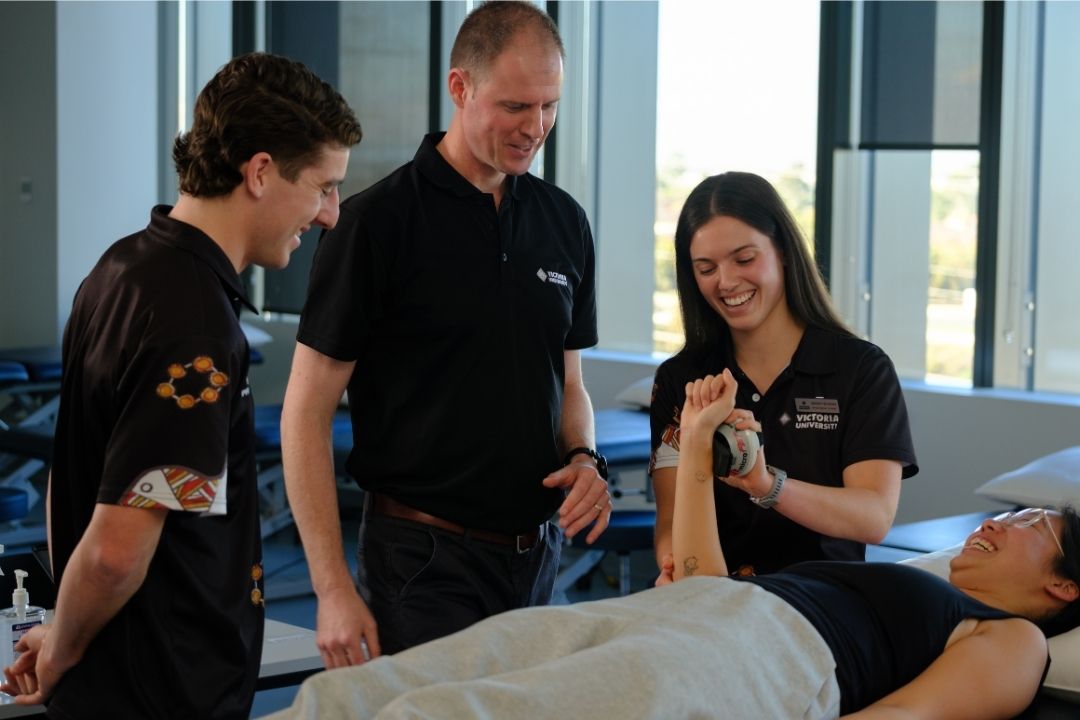
Physio is a practical profession, so your training should be practical too. At VU, you’ll spend time developing:
assessment skills (how to work out what’s going on)
treatment skills (what to do, how to progress it, how to measure change)
communication skills (explaining plans clearly and building trust)
clinical reasoning (making decisions with real constraints, not perfect textbook scenarios)
You’ll also be assessed in ways that reflect real practice, including practical exams and simulation-based tasks, so you’re not waiting until placement to find out what it feels like to work with patients.
Placements & partnerships: where everything clicks
Placements are where your learning becomes real. They help you:
build confidence working with patients and clients
learn how different settings operate (private practice, hospital, rehab, community)
work alongside experienced clinicians who guide your development
explore different physio specialities before you choose a direction.
VU’s placement ecosystem is built around giving students exposure to a wide range of settings, through placements with partners like Western Health and the Western Bulldogs.
What does a physiotherapist actually do?
Physio is a hands-on health career where you help people move better, feel better, and get back to the things that matter to them, whether that’s sport, work, parenting, or just walking without pain.
Day to day, physios usually:
assess what’s going on (movement, strength, pain, function, and what’s contributing to it)
set goals with the person in front of them (not just “fix the injury”)
design a treatment plan (often exercise-based, sometimes hands-on, usually a mix)
coach and progress rehab over time (adjusting based on what’s working)
work with other health professionals (GPs, surgeons, nurses, OTs, psychologists, exercise physiologists)
document and communicate clearly, especially in hospital and community settings
Keep in mind the setting you work in changes the vibe a lot.
Exploring different physio specialties
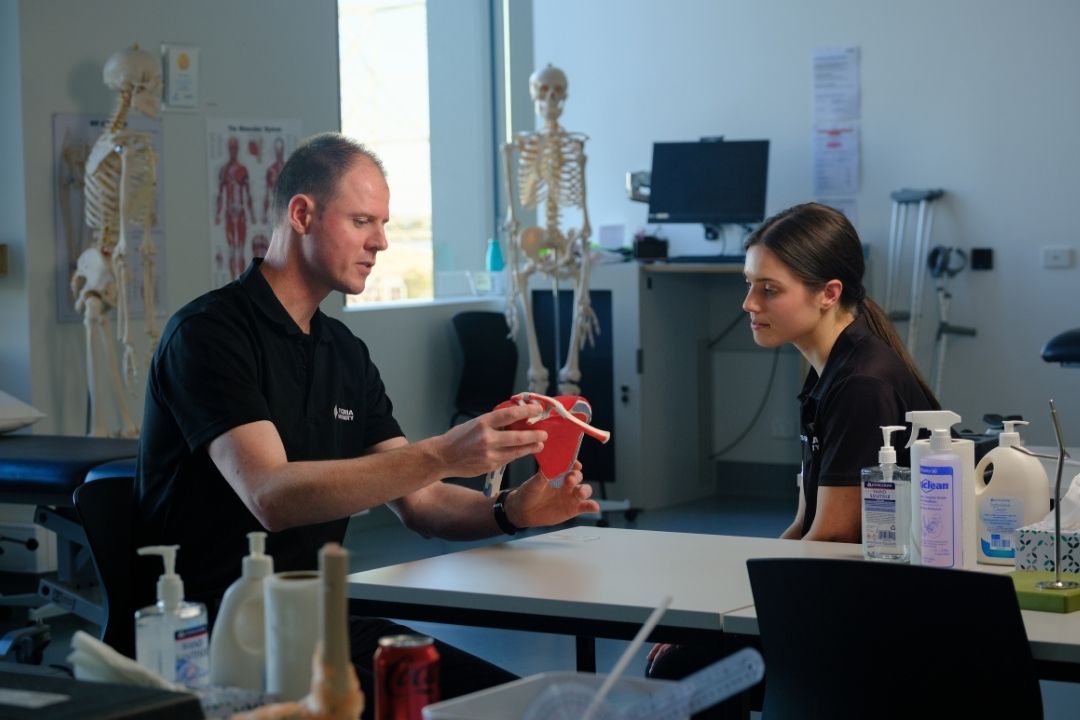
One of the best parts of physiotherapy is how many directions you can go. A lot of students start with one idea (like sport) and discover a completely different speciality once placements begin.
That's one of the best parts: you don’t have to pick your speciality on day one. Most students don’t. The goal early is to learn the foundations, experience different settings and notice where you feel most switched on.
What is the difference between physiotherapy & osteopathy?
A physiotherapist takes a comprehensive look at your issue, diagnosing the problem while considering your overall health, daily activities, and lifestyle. Physiotherapists address specific issues like injuries and chronic conditions through education, prescribed exercises and assistive devices. In Australia, physiotherapists can practice in hospitals as well as private practice.
On the other hand, an osteopath examines your body’s structure, particularly the muscular and nervous systems, to see how they affect function. Treatment combines active and passive therapies, such as joint manipulation, mobilisation, massage, postural advice, and tailored exercise programmes. In Australia, osteopaths can only practice in private practice.
Study physio at VU
Study physiotherapy at VU, where you'll:
- Learn one subject at a time in practical workshop-style classes
- Build real-world skills through placements with sports clubs, community organisations, hospitals and more
- Access support from day one so you can succeed instead of burning out
- Build industry connections and get placement experience so you graduate job ready.
Physio is a career you build through practice. Choosing a course that gives you real-world experience early is the best way to start.