You may find these frequently asked questions (FAQs) useful. If you have any other queries, email
Victoria University International directly, or contact us on +61 3 9919 1164.
How do I apply?
To apply for a course, complete the corresponding application form(s). These forms can be downloaded from this web site or found in the appropriate international course guides. For further information, visit how to apply.
How do I know if I will get into the course that I want?
If you go to entry requirements and your selected level of study (for example undergraduate entry requirements) you will be able to get an idea of whether you meet the minimum requirements. Once your application is received, the University will assess your application and if appropriate offer you a place. Alternatively, you may get a conditional offer, which may mean you need to meet further English language requirements or supply further documented evidence of your qualifications or experience.
Will I get exemptions or credit for study that I have already done?
Students may be granted credit for previous studies in higher education institutions in their home countries or from other recognised institutions. Visit credit for previous studies for more information and application procedures.
What are the fees?
Tuition fees are payable in full before each semester begins. Course fees are listed in the courses and fees section.
Can I work?
As an international student you can work a maximum of 20 hours per week while the courses are in session and full time during the holiday periods. You cannot expect to rely on this form of income for support because suitable work is not always easy to find.
In order to be able to work, you must apply for a Work Rights Visa after you arrive and studies commence. The work rights visa costs an additional AUD$60 and application forms can be downloaded at www.immi.gov.au/allforms
If you are found to be working in excess of limited work rights you are subject to mandatory visa cancellation.
Dependants of overseas students also have to apply for a work rights visa and are permitted to work 20 hours per week. Dependants of Masters and Doctorate overseas students may apply for unlimited work rights after the principal student visa holder has commenced his or her course in Australia.
Once you have commenced your study you can apply for a work permit from Victoria University International.
How much does it cost to live in Australia?
Realistic budgeting is vital to financial planning during your studies. To see examples of living costs in Australia, visit living expenses. You should be able to create a manageable budget prior to your arrival in Australia.
What campus will I be studying on?
The campus at which you study will depend on the course and subjects chosen. For specific details, visit courses and the table will indicate the campus at which the course is offered. If the course is available on more than one campus you can choose which campus you prefer when you submit your application.
When do I get my student card?
When you arrive in Australia you should go to one of the Victoria University International to find out about your enrolment date. Once you have enrolled in your course you can go to any of our Student Service Centres and receive your student card.
How do I get my student card?
Take your enrolment form to one of the Student Service Centres and they will take your photograph and create a student card instantaneously.
How do I get my medical insurance card?
When you pay your fees, you also pay the fee for Overseas Student health Cover (OHSC). Once you've arrived in Australia and enrolled in your course you can follow these steps in order to receive your OSHC Membership Card.
- Log onto www.oshcworldcare.com.au;
- Go to the Students toolbar and click 'Order a Membership Card';
- Enter your Policy OR Student ID Number, Family Name and Date of Birth;
- Enter your current Australian address, phone number and email address and press 'Continue';
- Click on 'Order a Membership Card';
- Confirm your details and then click 'Order a New Membership Card'.
For more details on how to order your OHSC card online download
ordering your OSHC card (341KB).
How do I know Victoria University has received my fees?
If you have paid your fees through an agent or forwarded them by post, you will receive a confirmation of enrolment that details the amount of money we received from you. Alternatively, you can check if payment has been received by attending one of our International Offices and an Information Officer will check with our finance department. It is a good idea if you are telegraphically transferring funds to make sure you have the TT number, bank and date of transfer, as this makes it a lot easier for our finance department to trace your payment.
How can I find accommodation?
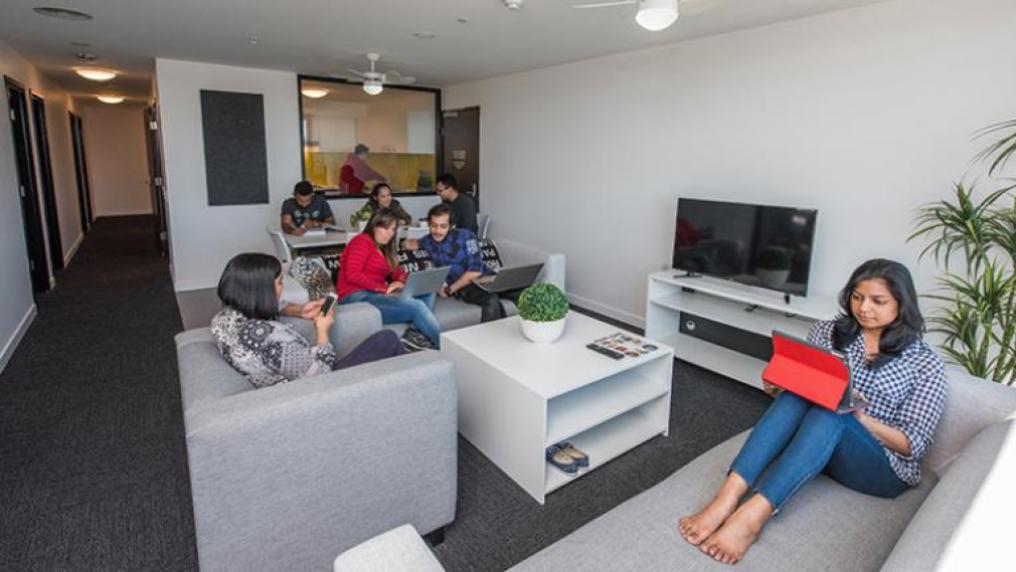
The University owns the Student Village and Sunbury Hall student residences. They both provide a safe, friendly environment for both international and Australian university students. The Student Village is located 9 kilometres from the heart of Melbourne situated close to the Footscray Park Campus. Sunbury Hall is newly refurbished and located at our Sunbury Campus.
You can ask our Student Housing Officers about alternative accommodation once you arrive in Australia. They are situated in Footscray Park Campus. Visit accommodation or the Student Housing Service for more information.
Does the University have on-campus accommodation?
Sunbury Hall is newly refurbished and located at our Sunbury Campus. The Student Village is situated close to the Footscray Park Campus, it is almost like on-campus accommodation. Want to find out more about VU accommodation?
Where do I get a course outline?
Course outlines are available online , or you can purchase the corresponding handbook from our bookshop (one for each faculty and one for the TAFE Division).
Why study in Melbourne, Australia?
Living and studying in Melbourne is a unique and exciting opportunity. Melbourne is Australia's second largest city, but it still maintains a friendly and welcoming environment. You will find it an inexpensive place to live, with an easily used and comprehensive public transport network.
As a multicultural city, Melbourne is the cultural hub of Australia. It has many cultural and performing arts festivals and a wide variety of foods from all over the world.
Sports fans will find Melbourne an exciting place, as it is well equipped with sporting centres and hosts a number of major sporting events. Matches of Aussie Rules Football, Test Cricket and the Australian Tennis Open are all held in Melbourne's world-class stadiums, and the Australian Grand Prix is held in Melbourne in March each year. Many sports centres in and around Melbourne provide the opportunity for you to try anything from swimming to rockclimbing to skateboarding.
Entertainment of every kind is available to you in Melbourne. There are numerous places to enjoy in and around Melbourne that can all be accessed by public transport or by tours. Our local bay beaches provide rollerblading and cycling paths, weekly craft markets, diverse cafes and numerous pubs with daily live music. To help you discover the best features of Melbourne, there are many free brochures providing information on the best live music, shows, films and tours available.
Melbourne is also a great base for travel, whether it be to the mountains for skiing and walking, to the ocean beaches for surfing and swimming, or to sub-tropical rainforests for bushwalking. All of these activities are possible in a day or weekend outing.
For more information about Melbourne and Victoria visit www.visitvictoria.com
Where do I get a map of the University?
You can get a map of the University at any of our Victoria University International offices. You can also view our campus maps online.
How do I defer my studies or change my courses?
International students wishing to change courses should submit a Defer Your Studies/Change of Preference form to Victoria University International.

(download here) (35KB) Students should consult Student Administration for information on the procedures and time frames for withdrawing from their previous course to ensure they do not risk any financial or academic penalty for late changes.
Students are required to remain with their first institution for 6 months of their principal course or for the duration of the course if the course is for less than 6 months. The Department of Immigration and Citizenship (DIAC) will only approve a transfer to another institution in exceptional circumstances.In all cases students must always notify their current education provider if they are changing to another Institution, or risk having their visa cancelled.
What are my visa requirements?
Visa related enquiries should be made before you arrive.