Preventing & responding to gender-based violence at VU
Victoria University acknowledges the victim-survivors of family violence, sexual assault, and all forms of gender-based violence – including our staff, students and community members who have experienced harm. We recognise the courage it takes to share your story and the importance of supporting all members of our community with care, respect and dignity.
Share a concern
If you have experienced or witnessed gender-based violence or inappropriate behaviour, you are encouraged to share your concerns in whatever way feels safest.
Disclosures, including anonymous ones, are always received with care and respect, and support or safety measures can be provided without a formal report.
Do not hesitate to report an incident or concern, even if you feel you may not have enough information for immediate action. This includes incidents that have occurred off campus or online and past incidents if they affect you or the VU community.
What happens when you share your concern?
Support services
You can access support services, report to Safer Community or both. If you have concerns about safety or have experienced concerning, threatening, or inappropriate behaviour, contact Safer Community in the first instance.
Safer Community
Mental-health support
Counselling
External support services
13YARN: Culturally safe crisis support line for Aboriginal and Torres Strait Islander people. Call 13 92 76.
Djirra: Culturally safe and accessible services to Aboriginal people seeking support. Call 1800 105 303
Black Rainbow: Support and advocacy for health and wellbeing of Aboriginal and Torres Strait Islander LGBQTI+SB people.
Q Life: Peer support for lesbian, gay, bisexual, transgender, queer and intersex (LGBTQI) people and their friends, families and allies. Call 1800 184 527
Rainbow Door: Specialist LGBTIQA+ helpline. Call 1800 729 367, text or live chat also available.
WIRE: Support, referrals and information for Victorian women, non-binary and gender diverse people. Call 1300 134 130
inTouch: Family violence services and support to migrants and refugees. Call 1800 755 988
Pride Disability Services: Specialised disability support services for members of the LGBTQI+ and gender diverse communities and allies. Call +613 8060 8218
1800 RESPECT: National helpline for advice and support about sexual assault. They can connect you with appropriate services wherever you are. Call 1800 737 732, live chat also available.
Western Region Centre Against Sexual Assault (WestCASA): Sexual Assault counselling and crisis support in the western suburbs of Melbourne. Call +61 3 9216 0444 (After hours: 1800 806 292)
Suicide Line Victoria: Free counselling and support for people at risk of suicide and anyone experiencing mental health issues. Call 1300 651 251
How you can support someone who shares an experience of gender-based violence or a concerning incident
- Listen and believe them.
- Respect their choices. Experiencing harm can take away a person’s sense of control, so support should be guided by what they want and consent to. Avoid judgement.
- Let them know support is available at VU, without pressure to make a formal complaint.
- Offer to sit with them while they explore support options.
- Maintain their privacy and confidentiality, unless someone is at immediate risk of harm.
Our commitment to preventing gender-based violence
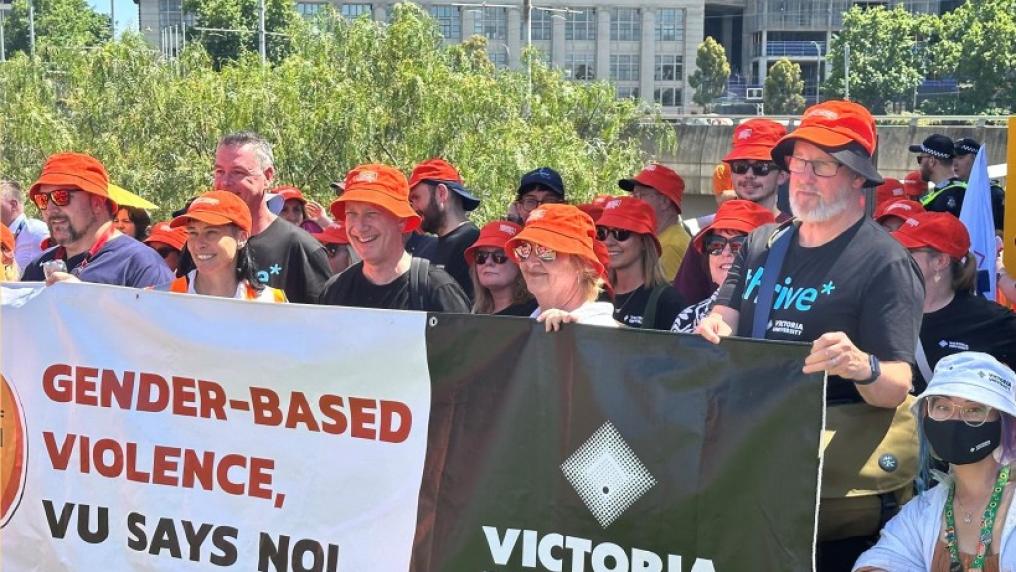
As part of our Strategic Plan, Victoria University is committed to preventing and responding to gender-based violence and creating a safe, respectful community for everyone.
Victoria University proudly welcomes the National Higher Education Code to Prevent and Respond to Gender-Based Violence (National Code), effective 1 January 2026. This milestone reinforces our unwavering commitment to safety and respect for all members of our community. We aim not only to meet but to exceed the requirements of the National Code, building on VU’s long-standing leadership in cultural change and inclusion.
What is gender-based violence?
The National Code defines gender-based violence as ‘any form of physical or non-physical violence or abuse by a person that is underpinned by gender-based power inequalities, rigid gender norms and gender-based discrimination that results in, or is likely to result in, harm, coercion, control, fear or deprivation of liberty and autonomy'.
Gender-based violence can be constituted by a single act, omission or circumstance or a combination or pattern of acts, omissions or circumstances over a period of time.
Gender-based violence can take many forms, including (but not limited to):
- physical, sexual, emotional, psychological, social, cultural, spiritual, and financial abuse
- technology-facilitated abuse (such as sharing intimate images without consent)
- stalking and harassment
- systems abuse (such as using legal or disciplinary processes to intimidate or silence someone, or misusing privacy rules to block legitimate information sharing)
- coercive control (such as patterns of behaviours that create fear and take away someone’s freedom over time)
- modern slavery, human trafficking, and forced marriage
- harmful practices that put sexual and reproductive health at risk (such as non-consensual removal of protection during sex)
- institutional violence (such as harm caused by policies, practices, or power structures within institutions)
- femicide or homicide.
This definition of gender-based violence was taken from the Department of Education resources about Gender-based violence and higher education. The page also has more information about the causes of gender-based violence and where it can occur.
About the National Code
The National Code is the higher education sector’s contribution to the national effort to end gender-based violence.
It recognises:
- the unique role higher education providers play in driving the social change needed to address gender-based violence
- the distinct responsibilities providers have in creating safe environments for study, work, social life and accommodation.
The National Code sets seven clear and legally enforceable standards to ensure all higher education providers take consistent, evidence-based action to prevent and respond to gender-based violence and drive enduring change for their broader higher education communities
Find more information about the National Code standards, development and resources.