How to become a patient transport officer in regional Victoria
Regional Victoria has a quiet but urgent problem. Rural and regional communities are struggling to find enough patient transport officers – the people who move patients safely when every minute counts.
Delayed transport means delayed care. And for people living far from major hospitals, that has serious consequences. But what if the people needed to serve regional communities are already living there – they just need a pathway to get qualified?
The shortage by the numbers
Healthcare is one of the hardest-hit areas when it comes to regional shortages. According to Jobs and Skills Australia, regional employers recorded a vacancy fill rate of 68.6%, compared to 71.8% in metropolitan areas. It's a gap that's persisted for years despite efforts.
And the pressure is only going to grow. Victoria's population is projected to increase by 23% between 2022 and 2032 – with healthcare demand expected to rise in step. The workers needed to meet that demand will have to come from somewhere. Why not from the communities that need them?
Training to support your community
For many regional Victorians, a career change often comes with a tricky trade-off: uproot your life, move to Melbourne and train there or stay put and miss out.
VU's Certificate III in Non-Emergency Patient Transport HLT31120 was designed to break that choice apart. You can now study mostly online with two two-week intensive training blocks in Melbourne across the year.
Liz Habermann knows better than most how much that shift matters.
Liz's journey to regional PTO
Liz Habermann has done a lot of things. She's raised five kids, worked in real estate, and spent almost 18 years running a bakery in South Australia. But the role that always pulled hardest was her volunteer work as an Ambulance Responder with the South Australia Ambulance Service (SAAS).
"My role as an Ambulance Responder with SAAS was by far my most rewarding volunteer role," Liz says.
When she and her family decided to move on from the bakery, Liz wanted to turn the work she loved most into a full-time career. She enrolled in VU's Certificate III in Non-Emergency Patient Transport – but at the time, the online pathway didn't exist. To get qualified, she had to leave South Australia and move to Melbourne.
Today she works as a Patient Transport Officer with the Royal Flying Doctor Service, splitting her shifts between metro and regional runs. She's also a mask fit tester and volunteers with the RFDS Memory Lane program.
"I'm a country girl at heart," she says. "Working regionally is especially enjoyable for me."
Her work varies from low-acuity patient transfers to medium-acuity 000 callouts – but it's the quieter moments Liz values most.
"I enjoy being able to talk to our patients and helping them feel at ease with an often-stressful situation. Even in the non-emergency sector, patients can feel overwhelmed and anxious, and I like that I have the skills to keep them calm, drive them safely, and help get them to further medical care or appointments."
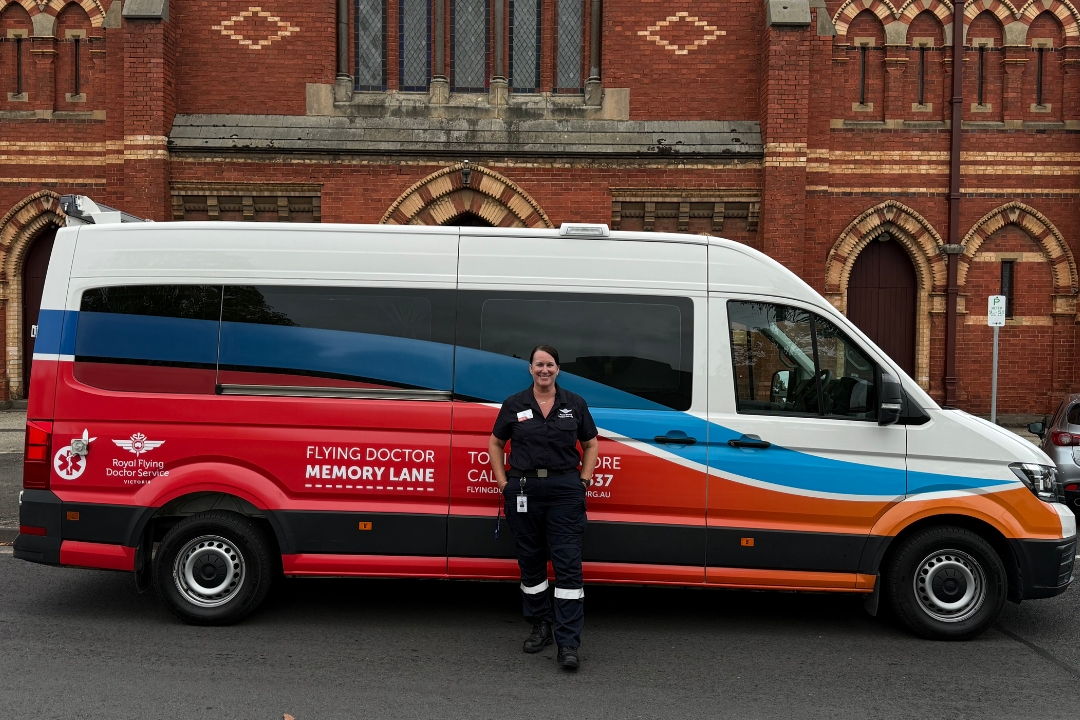
Training that gets you prepared
As a hands-on, mature-age learner, Liz credits VU's teaching approach – and the teachers themselves – for cementing her confidence on the job.
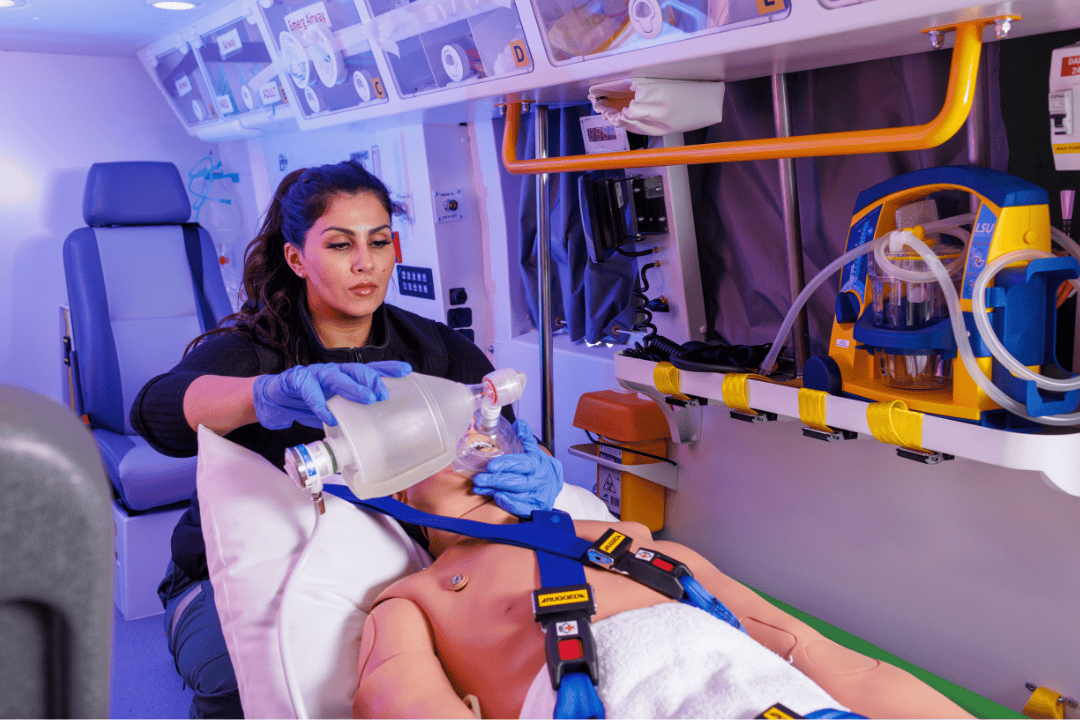
"I'm a hands-on learner, and having the theory cemented with practical experience helped the information to 'stick'. Operating the stretcher with confidence and understanding the limitations or dangers of such machinery was taught in a safe environment at VU using their Ambulance pod."
Liz's path demanded she uproot her life. She's adamant that future students shouldn't have to.
"Studying online breaks down those barriers, making it easier for those wanting to stay regional to have access for further education while also remaining at home. Had they offered online classes at the time, I may not have needed to totally uproot my life."
Her advocacy for regional pathways runs deeper than her own experience.
"Regional and rural areas are declining in population. If an education provider such as VU can offer a way these people can stay living in their hometown while still receiving a higher education, it will be a win-win for all involved.
Healthcare services are required everywhere, and those living regionally or in rural areas deserve the same high level of care city dwellers receive."
Ready to switch careers in your regional area?
The Certificate III in Non-Emergency Patient Transport (NEPT) is a nationally recognised qualification – and VU's new delivery model was built specifically to address regional demand.
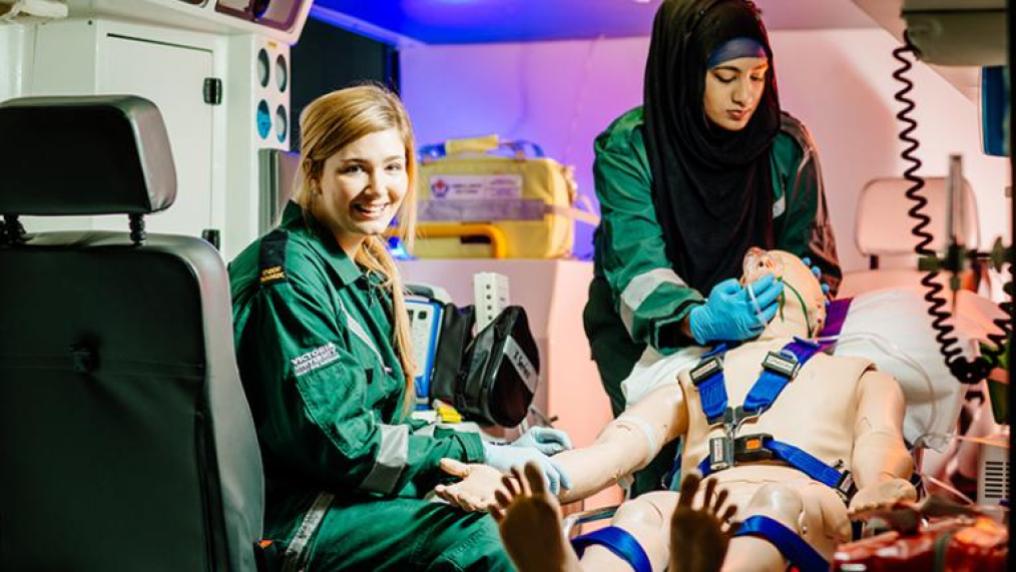
Students complete the majority of the course online and travel to Melbourne twice for hands-on training. The second of those intensives takes place in VU's new Centre of Excellence in Paramedicine, a state-of-the-art facility built to provide realistic training scenarios using the latest virtual reality and sensory experience technologies.
You'll also complete a rural placement with the Royal Flying Doctor Service and graduate with a guaranteed interview with RFDS or another NEPT provider. This means you get a foot in the door of a sector that's actively looking for people.
Serving where the need is greatest
The shortage of patient transport officers in regional Victoria isn't a future problem – it's here now. Who better to fill these roles than people who understand the communities they work in, people who are already embedded in local life?
Liz is part of a growing group of regional Victorians choosing to build meaningful health careers close to home.
VU's partnership with the Royal Flying Doctor Service reflects a shared understanding of what regional communities need: practical, flexible training that brings qualified workers to the places that need them most.
Ready to build a career that makes a real difference close to home?