10 jobs AI can't replace – and VU courses to get you there
Headlines love to list the jobs AI will kill. But it's also worth asking: which jobs still need a human in the room?
These 10 jobs are grounded in something AI fundamentally can't do. They're not just staying – most are growing fast according to Jobs and Skills Australia (JSA).
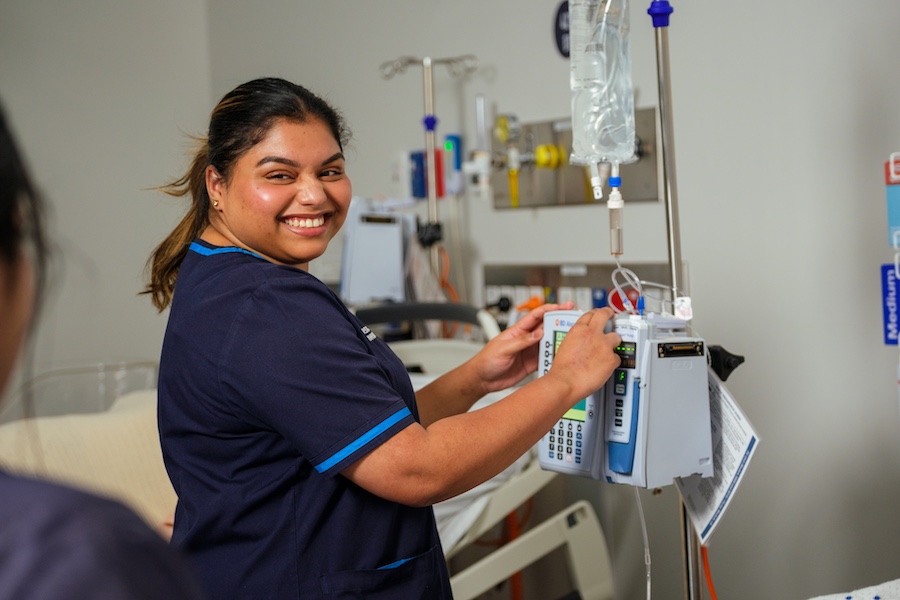
1. Registered nurses
Nurses combine clinical judgement, hands-on care, and emotional support in ways no algorithm can replicate.
JSA projects registered nurse employment to grow 13.7% in the five years to May 2030 – the largest projected jobs increase of any occupation in absolute terms. The federal Nursing Supply and Demand Study forecasts a national shortfall of more than 70,000 nurses by 2035.
2. Paramedic
Roadside trauma, mental health emergencies, regional callouts late at night – paramedicine is the kind of high-stakes, on-the-ground work that demands a human being in the room.
Demand is booming. JSA's 2025 projections list Ambulance Officers and Paramedics among the fastest-growing occupations in the country, with employment projected to rise 22.6% over the decade to 2035. Ageing populations, regional service expansion, and growth in primary and community paramedicine all point the same way: more paramedics, not fewer.
3. Exercise physiologist
Designing and prescribing exercise for people with chronic conditions, injuries, or complex care needs is hands-on, individualised, and deeply human work.
Allied health is one of the strongest-growing professional categories in Australia. JSA projects physiotherapists – the closest equivalent in their data – to grow 33.6% over the decade to 2035, the single highest growth rate of any occupation in their projections. Exercise physiology, an ESSA-accredited allied health profession, sits in the same expanding ecosystem.
4. Early childhood educator
The duty of care, attachment, and developmental nuance involved in working with children from birth to five years is something software simply can't be trusted with.
Early childhood teaching is among the education roles JSA flags as in shortage on its 2025 Occupation Shortage List, with teacher numbers projected to grow 12.1% over the decade to 2035 – and generous Victorian Government scholarships and incentives are available for eligible students.
5. Electrician
You can ask AI to design a circuit – but it can't get into a roof cavity, diagnose a fault, fix it and certify the work to Energy Safe Victoria. Electrical trades are physical, regulated, and high-skilled.
Skilled trades are the single biggest contributor to Australia's persistent skills shortages. JSA's 2025 Occupation Shortage List shows nearly half of all trade roles remain in shortage, and industry workforce estimates suggest Australia needs 32,000–42,000 additional electricians by 2030 to support housing, renewable energy, and infrastructure projects.
6. Construction manager
Australia is in the middle of its largest building program in history, and someone needs to actually run the sites. AI can model schedules and crunch costs, but it can't manage subbies, navigate council inspections, or make the call when a slab pour goes sideways at 4pm on a Friday.
JSA flags Construction Managers as a national shortage occupation with continuing strong demand, especially across residential, commercial, and infrastructure projects. The role is on the Core Skills Occupation List for skilled migration – a fair signal that local supply isn't keeping up.
7. Social worker
Working with vulnerable people, navigating family violence, advocating for human rights – this is some of the most ethically complex work in society. Decisions made by social workers carry real legal and human consequences, which is exactly why AI can't be trusted to make them.
JSA projects social worker employment to grow 25.3% over the decade to 2035 – 14.6% in the five years to 2030 alone – driven by mental health, aged care, disability, and child protection demand. Social workers are listed on Australia's skilled occupation lists and identified by JSA as a persistent shortage profession.
8. Secondary teacher
A classroom of teenagers is one of the most complex social environments on earth. AI can generate lesson plans, but it can't read a room, mentor a struggling student, or hold professional accountability for a child's learning over a full school year.
JSA lists secondary teachers as in shortage in every Australian state and territory, with particularly acute gaps in maths, science, and technology – exactly the disciplines schools need most. Government incentives include relocation bonuses and study subsidies for high-need subjects.
9. Cyber security specialist
Here's the irony: as AI gets more powerful, the people defending against AI-enabled cyber attacks become more valuable, not less. Threat detection, incident response, and digital forensics need humans who can think like attackers and make judgement calls under pressure.
JSA projects employment across database, systems administration and ICT security roles to grow 24.0% over the decade to 2035 – well over double the national average – and Australia is currently short an estimated 30,000+ cyber security professionals, with demand expected to double by 2030. The Australian Cyber Security Strategy 2023–2030 has made workforce growth a national priority.
10. Data & AI specialist
Someone has to build, govern, and validate the AI systems everyone else uses. Demand for people who understand machine learning, data science, and the ethics behind both has surged. According to industry research, AI Engineer was Australia's fastest-growing role, with AI-related demand surging since 2023, and JSA projects ICT Managers to grow 25.5% over the decade to 2035 – the second-highest growth rate of any management occupation.
The big picture on AI-proof jobs
There's a pattern in this list. The roles AI can't replace are the ones built on physical presence, embodied judgement, regulated accountability, or deep human trust – and increasingly, the ones designing and defending AI itself.
JSA's 2025 projections point to 961,000 new jobs in the five years to May 2030 – and nearly 2 million by 2035 – with healthcare, professional and technical services, education and construction absorbing the lion's share. More than 90% of that growth is made up of jobs that require uni or TAFE qualifications. Ready to get started?