Where could a datacentre career take you?
From your streaming service to your banking app, every digital experience you have is powered by a datacentre. And as cloud computing and AI continue to reshape Australia's economy, the demand for skilled datacentre professionals is accelerating – fast.
That's why Victoria University (VU) and Microsoft have partnered to launch Victoria's first Datacentre Academy, offering fee-free short courses designed to get you job-ready for one of the most in-demand sectors in the country.
But what does a career in datacentres actually look like? And what could you earn? Here's what you need to know.
What is the VU Datacentre Academy?
The VU Datacentre Academy is a hands-on training program co-developed with Microsoft and co-funded by the Victorian Department of Jobs, Skills, Industry and Regions. It offers two short courses designed to address a real and growing skills shortage in the sector.
The Datacentre Essentials course runs for 12 weeks, three days a week on campus. It covers the fundamentals you'll need to hit the ground running in a datacentre environment – including power management, airflow and cooling, fire suppression systems, routine maintenance, vendor management, security and sustainability practices. You'll also receive support to prepare for the CompTIA A+ certification – one of the most recognised entry-level IT credentials in the world – with free exam vouchers included.
The Critical Environment Technician runs for 16 weeks with three days a week on campus. You’ll cover similar topics to the Datacentre Essentials course, but with a focus on supporting digital operations and infrastructure.
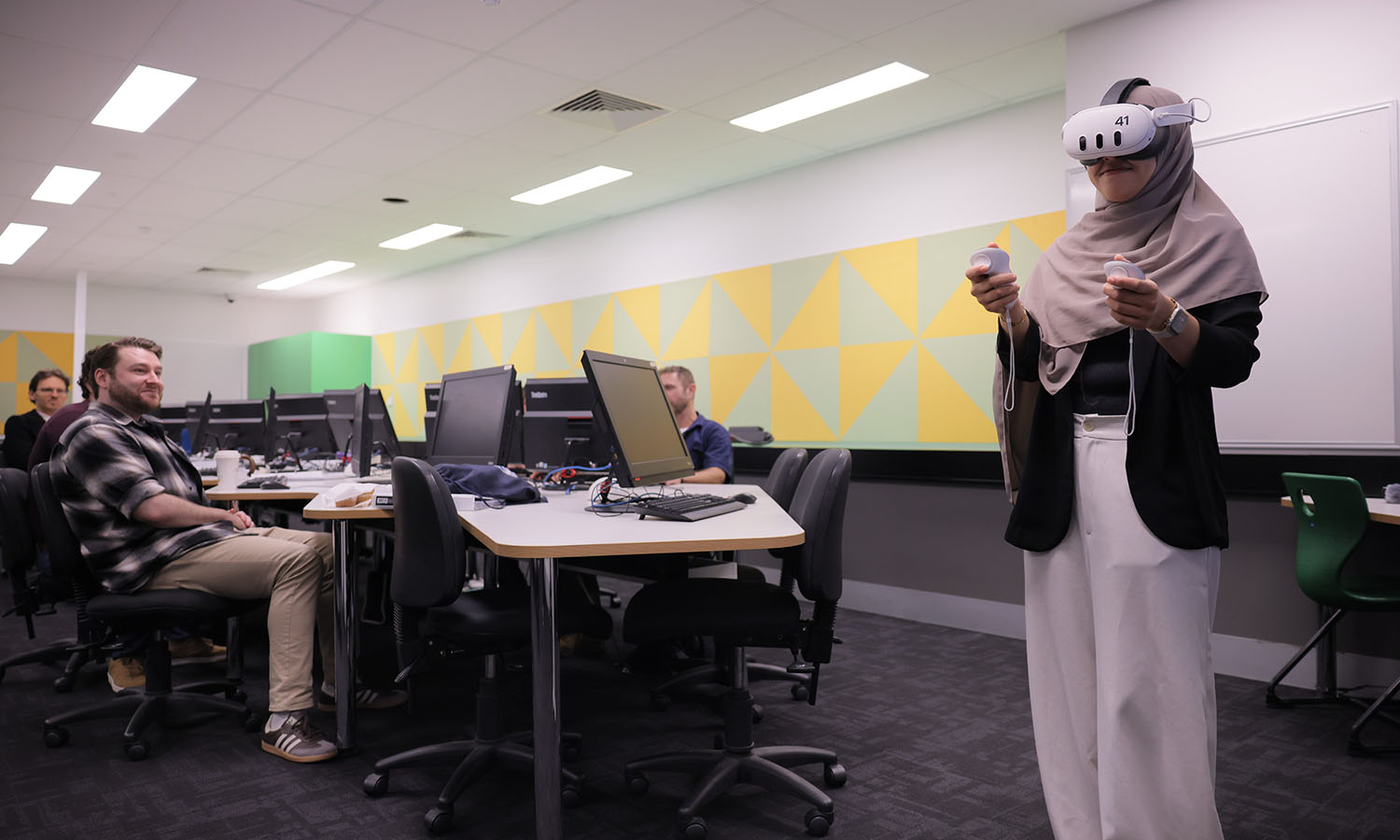
Both courses will see you learning in purpose-built labs simulating real datacentres, and you’ll walk away with practical skills you can use right out of the gate. Plus, did we mention they’re free?
Who is this course for?
The Datacentre Essentials course is open to Australian citizens aged 18 and over who have basic IT skills or experience. Preference is given to applicants who hold a Certificate III in Information Technology or have two years of relevant IT experience – but if you've got the drive and the aptitude, there's a pathway in.
Places are limited to just 48 students across the full Academy program, so it's a selective opportunity worth acting on early.
The Critical Environment Technician course is also open to Australian citizens aged 18 and over, with entry via a Pre-Training Review, literacy and numeracy assessment and an on-campus interview.
Citizenship is essential for working in these fields, as employment requires an NV1 security clearance.
Jobs you can land after finishing Datacentre Essentials
Completing the Datacentre Essentials course sets you up for entry-level roles in a growing sector. Here are some of the career paths graduates can pursue – along with current salary ranges sourced directly from Seek.
Datacentre technician
The most direct role out of the course. Datacentre technicians keep critical infrastructure running – monitoring systems, maintaining servers, managing cabling and hardware installations, and responding to incidents. With Australia's datacentre sector expanding rapidly, demand for this role is high and climbing.
IT support engineer
A versatile entry-level role that can fit into a wide variety of industries. IT support engineers troubleshoot hardware and software issues, support end users and help maintain IT environments day to day.
Network administrator
Network administrators design, manage and maintain the computer networks organisations depend on. As you build experience and technical depth in datacentres, network administration is a well-established mid-career path with solid earning potential.

Jobs you can land after completing Critical Environment Technician
Completing the Critical Environment Technician course can prepare you for many of the same roles as the Datacentre Essentials course. Here are some of the career paths you can pursue.
Critical environment technician/Datacentre technician
Critical environment technicians play a similar role to datacentre technicians – they keep critical infrastructure running at its best, taking care of hardware installations and incidents.
Facilities Coordinator
The skills you'll learn through the Critical Environment Technician course will also prepare you to handle maintenance and incident response in other workplaces.
Licensed electrician (with further study)
With further study, you could sharpen your foundational skills from this course into a future career as an electrician.
If you're new to the field, you can lay the groundwork for an electrical apprenticeship or traineeship with the Certificate II in Electrotechnology (Pre-vocational). This course takes four months to complete, full time.
After completing this course, you'll be ready to take on the Certificate III in Electrotechnology Electrician – but you'll need to be employed as an apprentice to be eligible.
And once you've completed this certificate, you'll be fully qualified to work as a licensed electrician.
There's a growing need for datacentre technicians
Victoria is scaling up to meet surging demand from cloud and AI adoption, with new data centre facilities coming online and existing sites being upgraded. That growth is creating genuine, long-term employment opportunities for people with the right hands-on skills.
As Microsoft Australia's General Manager of Corporate and External Affairs, John Galligan, put it at the Academy's launch: "As demand for datacentre capacity grows, so does the need for technicians with the right hands-on skills. The Datacentre Academy at VU is about opening doors and equipping Victorians with job-ready skills and a clear pathway into high-growth careers that will power our communities for decades to come."
That commitment to practical, career-ready learning is something VU graduates already working at Microsoft know well. Elaina Pittas studied Business and Marketing at VU's Footscray campus and today works as a Senior Go-to-Market Manager in Microsoft's Cloud & AI Platforms business.

"VU's hands-on approach helped me build confidence applying theory to real scenarios – collaborating in teams, balancing different stakeholder needs, and delivering to deadlines," says Elaina. "Those skills translate directly into my current role at Microsoft."
What future pathways can I take?
Interested in furthering your skills and knowledge in IT? Great choice – there's a course for you at VU, no matter what stage you're at.
Ready to apply?
The VU Datacentre Academy is a fully funded, industry-backed program with a direct line to employment in a fast-growing sector. With just 48 spots available, it pays to move early.
Explore the Datacentre Essentials and Critical Environment Technician courses and apply today.