
How to become a building surveyor: qualifications & career paths
Build a career where you get the final say on whether a building is safe. As a building surveyor, you’ll check plans, inspect construction and sign off on the homes, schools and hospitals people use every day.
It’s a career in huge demand – building surveyors are currently in national shortage across Australia. This guide covers everything you need to know: the qualifications you’ll need, how registration works and the career paths that open up once you’re qualified.

Quick answer: how do you become a building surveyor?
In short, it takes three steps:
What does a building surveyor do, day to day?
Building surveyors make sure buildings are safe to use, accessible and energy efficient. They provide independent oversight of building work from the planning stage right through to completion. Depending on where you work, a typical week might involve:
assessing building plans against building codes, regulations and Australian standards
issuing building permits so construction can go ahead
inspecting building work at key stages of construction
issuing occupancy permits once a building is safe to use
enforcing standards through directions to fix, building notices and building orders when work isn’t up to scratch
working with builders, architects, engineers and councils to solve compliance problems.
The variety is huge. One day you might issue a permit for a backyard shed; the next, you could be inspecting a hospital or a high-rise apartment tower.
What’s the difference between a building surveyor and a building inspector?
Building inspectors carry out inspections of building work on behalf of the relevant building surveyor. Building surveyors have broader responsibilities, including issuing building permits and occupancy permits. Many people work as a building inspector or assistant building surveyor on their way to becoming a registered building surveyor.
Despite the name, building surveying isn’t about measuring land – that’s the job of a land surveyor.
Career paths in building surveying
Once you’re qualified, you can take your career in plenty of directions.
Is building surveying in demand in Australia?
Yes – and the pipeline of work is huge. Jobs and Skills Australia’s 2026 Occupation Shortage List rates building surveyors as being in national shortage. Victoria’s building regulator describes the shortage as critical, affecting both councils and the wider construction industry.
Housing targets are adding to the pressure. Under the National Housing Accord, governments have agreed to build 1.2 million new homes over five years from July 2024. Victoria is also aiming for 800,000 homes over the next decade. Every one of those homes needs a building surveyor to sign it off.
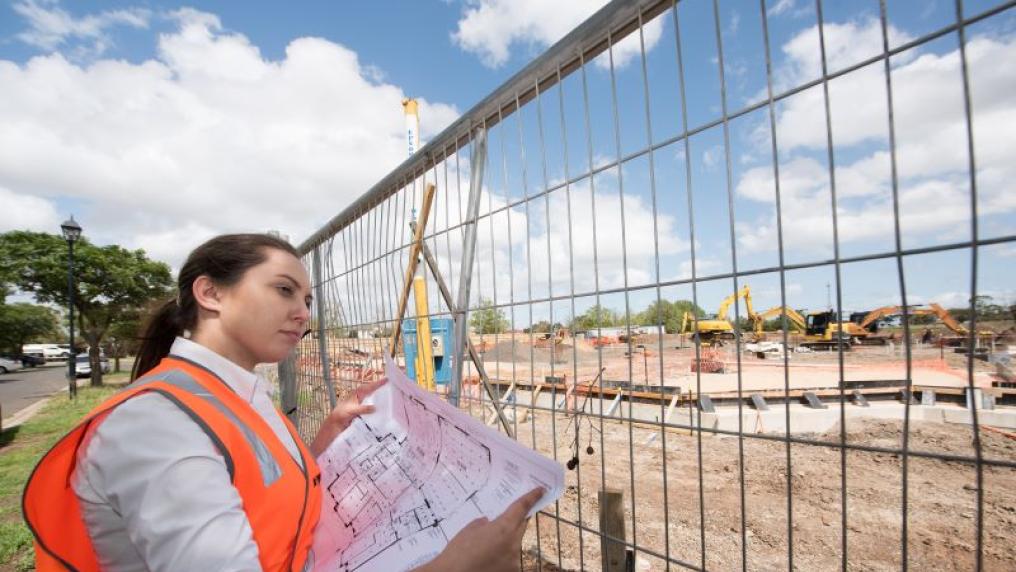
Signs you’d make a great building surveyor
There’s no single personality type that suits building surveying. But if these traits sound like you, you’ll likely thrive in the profession.
You notice the details
You’re the person who spots the missing step or the thing that doesn’t quite line up.
You like knowing how things work
You’re curious about how things work and why important rules exist.
You’re a problem-solver
You enjoy working through tricky situations until you find a solution that works.
You can stand your ground
You’re comfortable pointing out problems and offering advice calmly, clearly and with evidence.
You like a mix of desk and site
You’d enjoy splitting your work week between assessing plans and getting out on site.
You’re always learning
Building codes and construction methods keep evolving, and you’re happy to keep up.
If you’re still at school, you might notice some of these traits in maths, design and technology, or group projects. If you already work in construction, a trade, architecture or engineering, your site knowledge and skills will translate directly.
How to get qualified as a building surveyor
To work as a building surveyor in Australia, you need two things:
A recognised building surveying qualification. Your qualification also shapes what you can work on. A degree gives you the broadest scope, while a diploma limits the class, height and size of buildings you can work on.
Registration with your state or territory building regulator. In Victoria, that’s the Building and Plumbing Commission (BPC). The BPC now incorporates the former Victorian Building Authority (VBA), so you may still see the VBA mentioned in older resources.
How does registration work in Victoria?
There are two classes of registration:
Registration class | What you can work on |
|---|---|
Building surveyor (limited) | all classes of building up to three storeys, with a maximum floor area of 2,000 square metres |
Building surveyor (unlimited) | all classes of building, with no limits on height or floor area |
The BPC wants to see relevant, practical experience gained under the supervision of a registered building surveyor, including:
assisting with building permit, occupancy permit and temporary occupation applications
carrying out construction inspections for residential and commercial buildings
identifying and reporting non-compliant building work
preparing directions to fix, building notices and building orders.
For unlimited registration, your experience must also cover buildings over three storeys and buildings with a floor area of more than 2,000 square metres.
When you apply, you’ll need to submit the following documents, unless you hold an AIBS or RICS accreditation that matches the class you’re applying for:
a technical referee report from a registered building surveyor in the same class or higher
an experience statement
an experience logbook
an evidence portfolio.
The BPC may also invite you to an assessment interview.
Hot tip: start filling in your experience logbook as soon as you begin gaining experience. The BPC recommends it, and it’ll save you time when you apply.
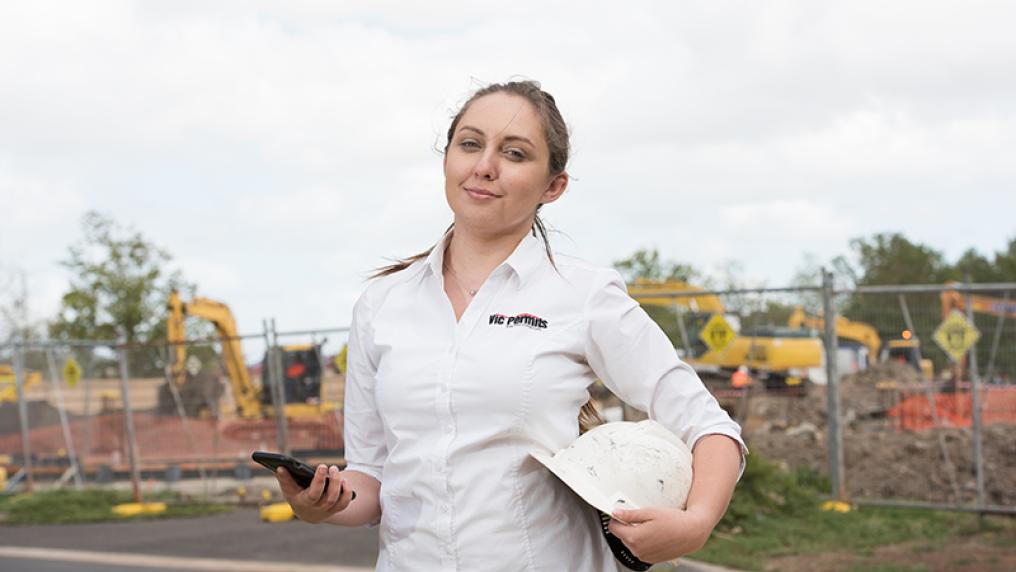
What is AIBS accreditation?
The Australian Institute of Building Surveyors (AIBS) is Australia’s national peak body for building surveyors. AIBS accreditation isn’t the same as registration, but in Victoria it can make registering a lot simpler.
If your AIBS accreditation matches the class you’re applying for, you won’t need to submit a referee report, experience statement, logbook or evidence portfolio. Here’s how the levels line up:
AIBS accreditation | Equivalent BPC registration class |
|---|---|
Level 1 | building surveyor (unlimited) |
Level 2 | building surveyor (limited) |
Level 3 | building surveyor (limited), restricted to Class 1 and 10 buildings (houses and associated structures like sheds and garages) up to two storeys, with a maximum floor area of 500 square metres |
You can join the AIBS as a student member while you study and access professional development, networking and career support.
Can you work as a building surveyor in other states?
Yes, but each state and territory has its own regulator and registration requirements. In New South Wales and Queensland, for example, building surveyors are known as building certifiers. They’re registered through NSW Fair Trading and the Queensland Building and Construction Commission (QBCC).
Already registered in another Australian state or territory, or in New Zealand? You can apply for registration in Victoria under mutual recognition, though the BPC may add conditions. Many regulators also recognise AIBS accreditation, which can make moving interstate easier.
If all that sounds like a lot, don’t worry. The right course gives you the knowledge you need, and many students start building their experience while they study.
Becoming a building surveyor at VU
There’s more than one way to start your building surveying career at VU. The right route depends on where you’re at right now.
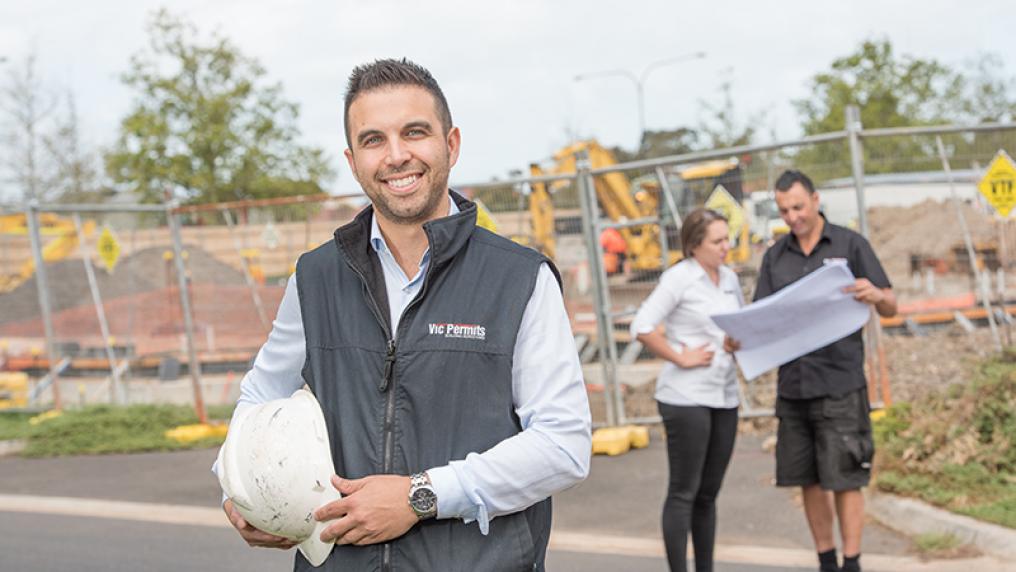
Why study building surveying at VU?
Study building surveying at VU, where you’ll get:
flexible online study: 100% online and in real time, with just nine scheduled hours of classes a week
the VU Block Model: go deep on every topic by focusing on one subject at a time in four-week blocks, instead of juggling several at once
teachers who work in the industry: current knowledge and real-world experience in every class
real-world projects: connect with industry partners like Hendry Group, McKenzie Group Consulting and several Melbourne councils through projects, guest speakers, site visits and industry expos
a final-year industry project: team up to tackle an applied project sourced from an industry partner
pathways with credit: step up from TAFE to uni without losing time.
VU is also #1 in Victoria for skills development and #4 in Australia for graduate employer satisfaction, which means employers rate our graduates as ready to make an impact from day one.
How long does it take to become a building surveyor?
It depends on your route. As a rough guide:
direct route: 3 years of full-time study, plus at least 3 years of experience for unlimited registration
TAFE to uni pathway: 4 years of full-time study. You can also work towards limited registration after the Advanced Diploma once you have 2 years of experience.
career-change route: 1 year of full-time study for graduates of related degrees, plus the experience you need for your registration class.
The good news? You don’t have to wait until you graduate to start gaining experience. Building surveyors are in such high demand that, according to the AIBS, many students land paid roles while they study. That experience counts toward their AIBS accreditation.
Ready to start your building surveying career?
About to finish Year 12, already on the tools or ready for a career change? No matter where you're at, building surveying puts you at the heart of every project – and keeps the people who use those buildings safe. Start your building surveying career at VU.