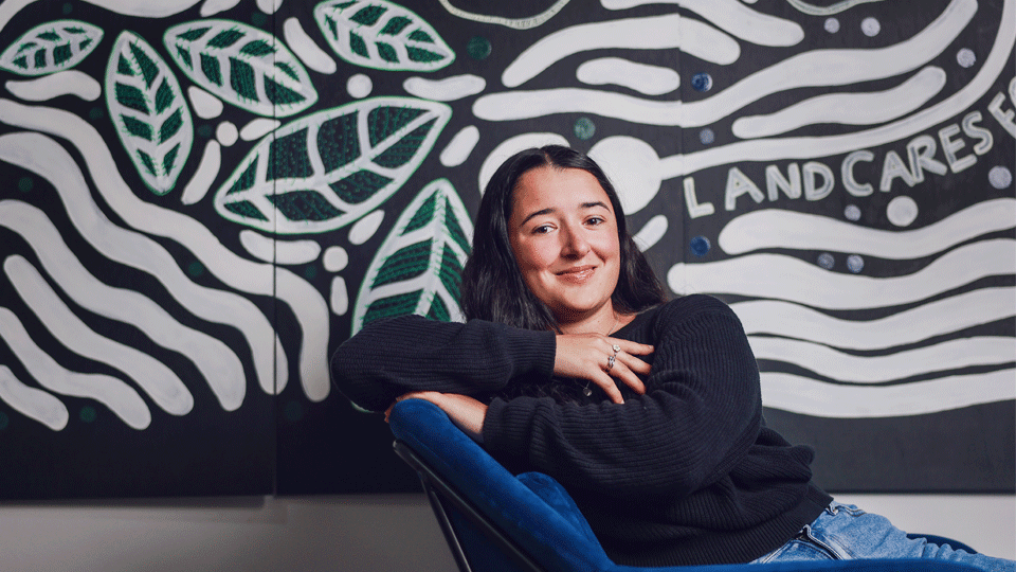
Emma Tong knew she wanted to work with young people, but beyond that, she wasn’t sure what it would look like in practice. That changed during her placement at headspace, Orygen in Melbourne’s west.
“As soon as I started, pretty much from day one, I was like, yes — this just feels right. Like a fish in water.”
At the time, she was studying social work at VU. The placement ran full-time over three and a half months.
It began with orientation and observation: listening in on calls, sitting alongside clinicians, before gradually shifting into practice. “You can learn a theory… but actually using it on a human being is a whole different level,” she says.
In the early weeks, she watched how experienced staff worked: how they listened, how they responded, how they handled situations that didn’t follow a script. Then she began making calls herself, at first under supervision, then independently.
By the end of the placement, she was running sessions on her own, with support nearby if she needed it. This transition — from learning about the work to doing it - is exactly what placements are designed to enable.
At Orygen, a VU partner co-located at the Werribee campus, students are treated as part of the team. They move across different settings (schools, clinics, group programs) and work alongside experienced clinicians as they build confidence and capability.
“We provide a really well-rounded placement,” says Alison McRoberts, Clinical Implementation Lead at Orygen, who works across headspace centres in Melbourne’s west and north west and coordinates student placements.
Students arrive with technical knowledge, she says, but the reality of the work is more complex. “I often tell them that it’s not as neat as what you’ve been taught.” At headspace, students are part of the service.
They support intake, run group programs and work directly with young people and families. In doing so, they increase the number of people the service can reach. “We would not be delivering the number of programs and quality of programs without the students,” Alison says.
The impact of that work is visible when it stops. “When Emma finished her placement last year, we noticed it straight away - there was a big drop in the number of young people we were seeing, just because of the work she had been doing.”
In services already under pressure, that difference matters. Demand continues to grow, particularly in Melbourne’s west, where many centres are working in areas of incredible unmet demand.
“There’s massive shortages across the state,” Alison says. Meeting that demand depends on a steady flow of graduates who are ready to step into the work. “This is how we grow our workforce,” she says.
“Four out of five of our headspace managers were former students.” This connection is particularly important in Melbourne’s west. Many of the students coming through are from the same communities they end up working in; something Alison says makes a real difference in practice.
“VU students understand the community because it’s where they live — often its where they grew up — and where they studied. And so they know the issues, and they know how best to engage with people in the community. You can’t put a price on that.”
Students bring local knowledge, familiarity with schools and services, and an understanding of the pressures facing young people and families.
In a setting where trust matters, that can shape how quickly support happens and how effective it is. A few months into her first role at headspace Melton, Emma is already part of that system. She works across intake, assessment and ongoing support, often in situations where there are multiple pressures on a young person and their family.
“If we can upskill the families, automatically the young person’s world will improve,” she says. For Emma, the work comes back to something simple. “For a lot of young people, they don’t have that safe adult to talk to… just making sure that that space is safe and they feel heard… is so important.”
Her move into the role came directly from placement. “I didn’t really apply anywhere… I was approached,” she says. “I didn’t hesitate. I knew I wanted to come back.” For Alison, that progression is the point.
Students gain experience in real settings, and services build their future workforce, which is something that will only become more important as demand continues to grow.
“It’s not optional. Without students coming through, we won’t be able to meet demand.” For Emma, the work stays grounded in the day-to-day. “I love getting to know different humans and their stories,” she says.