Bringing wellbeing to every campus
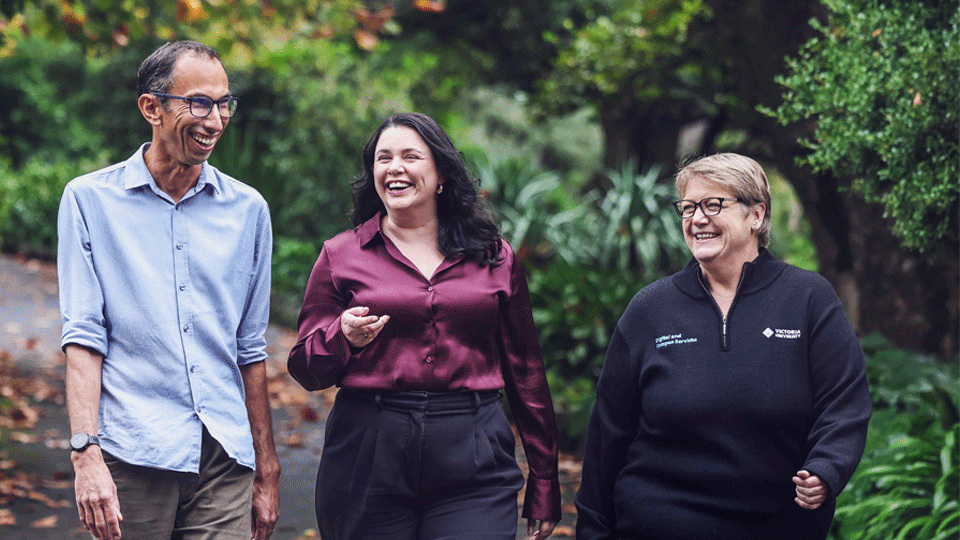
Most workplace wellbeing programs sit slightly outside everyday life – something people are encouraged to access when they are stressed, overwhelmed or running on empty.
At VU, thrive* takes a different approach. The award-winning program brings staff and students together through hundreds of free activities held across campuses throughout the year — from creative workshops and physical activity to social and community-based sessions.
For Tracy Hoare, Information and Communications Technology Coordinator of Training and VIP Support, it started with a painting class. “It’s not something I’d ever done before,” she says.
“I just thought — you know what? That sounds fun.” What followed was not part of her role, but it quickly became part of how she experienced work.
“I had a box of craft items at home that I hadn’t used in years,” she says. “I offered to donate it and the Manager of thrive* said, ‘well, that means you should run a class.’ So, I was kind of thrown into it.”
“I do a lot of training as part of my role, so I’m used to standing in front of people, but this was different,” she says. “You get to know people in a completely different way.”
Activities that are designed & led by staff
Participation, rather than just attendance, sits at the centre of thrive*. Many of the activities are designed and led by staff and students themselves, creating opportunities for people to share interests and part of themselves that might otherwise stay invisible at work.
“I actually led an activity before I participated in one,” says Wouter van Dongen, Senior Lecturer in Environmental Science.
“I was asked if I could run something, and I thought — I love birdwatching, so let’s do that.” For Wouter, thrive* has changed how he experiences the university.
“I live in Central Victoria, and I used to just come in, teach and drive all the way back again. I felt like one small cog. Thanks to thrive* I know more people. I feel more connected. It’s changed how I see myself in the university.
Many activities bring staff and students together in the same space, outside of formal teaching and learning.
“When I went to university, the lecturer would come in, talk to you for an hour and then get out again,” Wouter reflects.
“You never had that connection.” “thrive* is a great leveller… we’re all doing the same activities together,” he says.
“I think it’s really important and I think it’s valuable.”
For April Vocale, Senior Manager, Student Complaints and Integrity Office, the impact shows up in everyday interactions. “My first exposure to thrive* was when I was looking for a way for my new team to get together and socialise outside of our office,” she says.
“It’s helped all of us to create connections with people around VU, so that we can now pick up the phone and chat rather than everything being very formal.
“I felt like I was part of something wonderful, part of a community,” she says. “And then when I saw the opportunity to contribute to that and create that feeling for other people, that was a real pull for me to decide to run a session.”
Finding hidden talents
For many participants, the value of thrive* is that it makes space for people to be more than their job title. Tracy Hoare “A lot of workplaces say, ‘bring your whole self to work’, but VU actually means it,” April says.
“Bring your whole self. Bring the part of you that makes cards or does birdwatching or bring a part of you that other people might not know.”
“What delights me is that so many people that work here have these amazing hidden talents or passions,” she says. “It’s a very safe space for them to come forward and share their passion with others,” Tracy adds.
“And I also feel like it’s really good for our mental health.” Sometimes, it’s as simple as having somewhere to go during a difficult day.
“If I’m having a really stressful time in a project, I will go and seek out an activity,” Tracy says. “I need to be able to walk away from it for an hour and just go and do something that’s not work. To be able to do that during work hours is a whole other level.”