Andrew Poole on change & challenger thinking
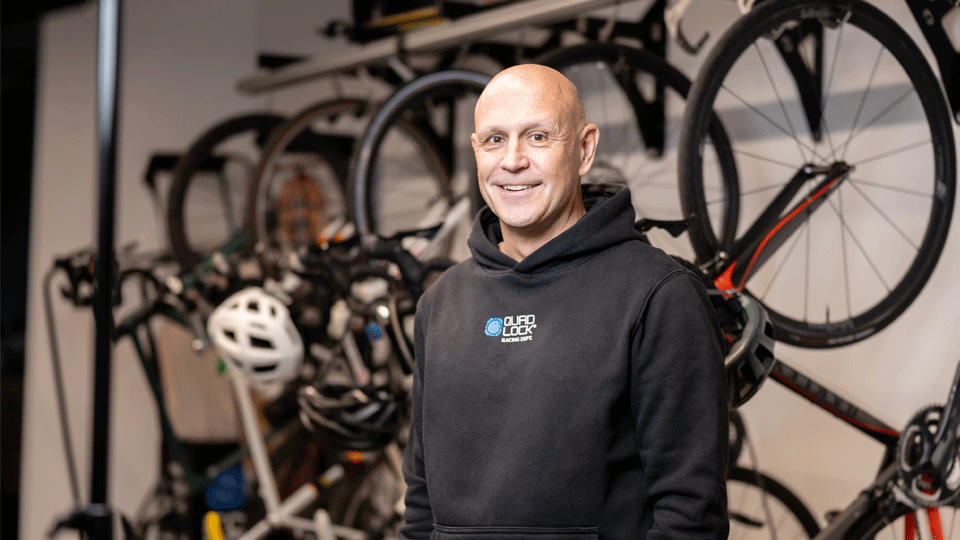
A senior executive with decades of multinational commercial experience, Andrew Poole has spent his career focused on customer needs, and building strong teams.
He’s been CEO of Quad Lock, a performance-based phone mounting device company, since 2022, and during this time the business has grown from 40 to 125 employees, and has yearly revenue of AUD $250 million.
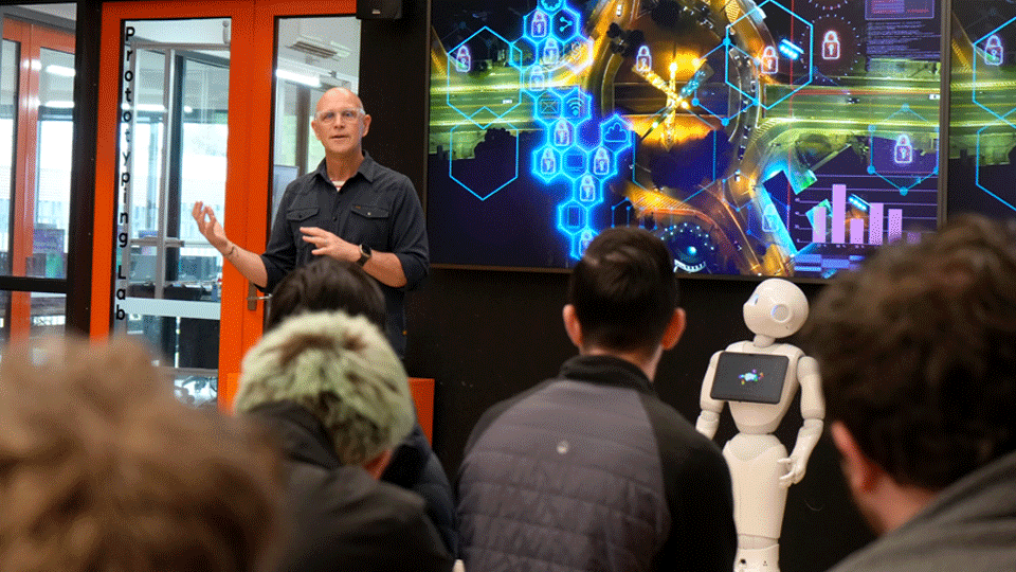
He recently caught up with students at Wyndham Tech School, sharing a little bit about his study journey and some career lessons and highlights.
Learning from experience
Reflecting on his school days, Andrew said he “wasn’t a super academic kid.”
“School was a bit of a struggle, and it took me a while to figure out what I wanted to do.”
After finishing year 12, he enrolled in a Bachelor of Bachelor of Arts (Sport & Recreation Management) at Victoria University in 1987.
“We were in the same building as the phys-ed students. We were a bit philosophically opposed - they were about the competition – who won – and the recreation students were more concerned about the experience we got out of the event” he said.
“We had a lot of fun; it was a great course.”
After graduation he travelled for three years before landing a full-time graduate role as a sales representative for Flora Margarine, part of the Unilever group.
I got to learn a tonne about how to deal with people. Walking into new environments where I didn’t know anybody, building relationships quickly, understanding the needs of the customer, the supermarkets, and making sure we could service them.”
Andrew remained with Unilever for nearly 10 years across a range of sales leadership roles. From there he moved to general manager of AURIAS Diamonds (owned by BHP Billiton), then on to Nike, where he worked as a senior executive in the US, Australia and the Asia Pacific for 17 years.
The consumer decides
The biggest learning that Andrew has taken from Nike, which he still uses every day at Quad Lock, is the notion that ‘the consumer decides’: brands need to understand the needs of consumers and build products that meet those needs.
“Nike’s guiding vision is to bring inspiration and innovation to every athlete* – *if you have a body, you’re an athlete,” he explained.
With that vision in mind, he said there are lessons to be learned from decisions Nike made post-COVID, where they pulled back from many wholesale relationships, and in doing so reduced product access for many of their consumers.
“The decisions looked good in the short term. But longer term they have had some real and critical impacts. Nike failed to listen to the consumer and was instead guided by a set of financial milestones that failed to materialise.”
He said this has been reflected in a significant drop in Nike’s share price between 2022 and 2026.
At Quad Lock, a product-led brand, he prioritises consumer needs at the forefront of all decisions.
“This is something that I talk to our teams about as we consider new product development. What is it the problem that we are trying to solve for the consumer?
“Are we building a product that’s going to solve a problem that the consumer has today, or are we creating a product that’s going to take a little longer to develop, but will actually deliver a greater benefit? Sometimes we build both.”
Hiring for cultural add, instead of cultural fit
When hiring, Andrew encourages his team to eliminate discussion around “cultural fit” and look for people who are “culturally additive” instead.
“We try to move the discussion away from cultural fit, because it implies that you are bringing in someone else who looks like, and thinks like, the rest of the team,” he explained.
“We look for curiosity and challenger thinking. People prepared to look for new, improved ways to solve both new and existing problems. People who are going to stretch the way the teams operate – or change the dynamics of the wider team.”
What high performing teams have in common?
Teams that perform at the highest levels are the groups that operate with a high level of trust. With that comes vulnerability. Those two factors alone enable a step change in team performance. This is particularly important for a senior leadership team, and it sets a wider example for the business.”
And he’s putting that thinking into practice with the Executive in Residence program.
“I’ve always believed in this notion of getting comfortable being uncomfortable. And the Executive in Residence program is definitely providing that opportunity."